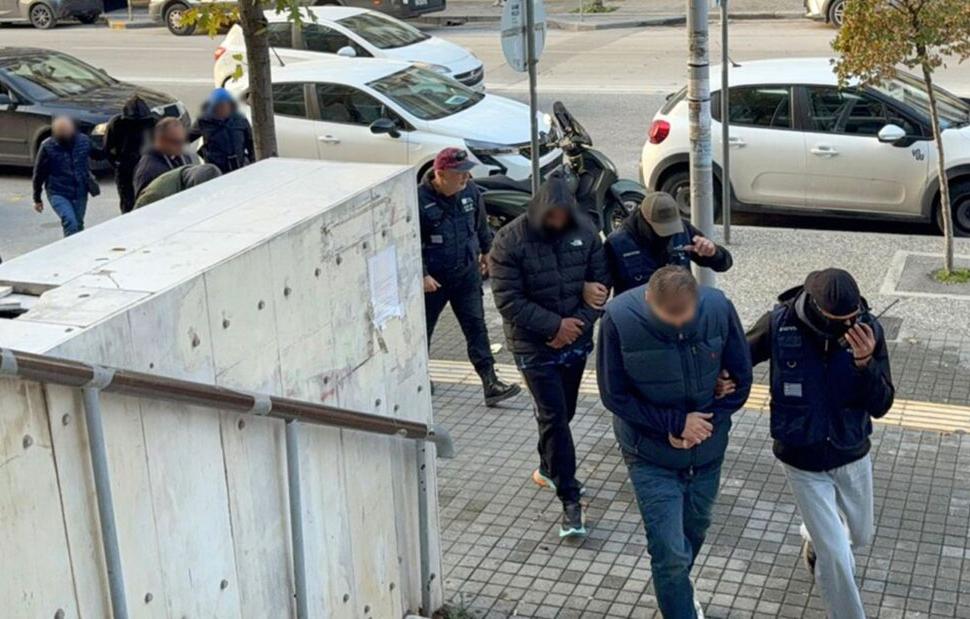
The revelations surrounding the activities of those arrested in connection with the tax evasion network in Thessaloniki show no signs of slowing down, as authorities continue their investigation in full force. According to police reporter Vasilis Lampropoulos, speaking Sunday afternoon (08/11) on MEGA’s “Developments Now” program, the case appears to be of extraordinary scale — estimated to involve between 80% and 90% of major dining and entertainment venues in the affected areas. “It appears this is an investigation that began approximately one and a half to two years ago by AADE, the Ministry of Finance, and the audit services. The picture emerging from some of the defendants suggests that, having faced financial difficulties — mainly during the COVID-19 period, just before and just after — at some point a collective agreement was reached among all these businesspeople. They may account for 80–90% of the hospitality and major entertainment venues in Thessaloniki and Halkidiki,” Lambropoulos said at the outset.
“Gradually, they reached an agreement whereby, instead of maintaining the normal ownerships they had held up until 2020–2021, that arrangement ceased to exist. What followed was coordination with accountants and lawyers — essentially forming a united front — in order to launch this scheme involving thousands of straw men who suddenly appeared across all these businesses. It became a common playbook that everyone quietly fell in line with,” Lampropoulos continued.
Thessaloniki tax evasion ring: What Vasilis Lampropoulos revealed
“Even the businesses that opened after COVID, in recent years, followed this model. It had become standard practice in Thessaloniki. They also note that just a few months ago, other networks were dismantled — networks connected to retail trade and imports from Bulgaria — which again involved hundreds of straw men: migrants, foreign nationals with financial problems, with health problems. At the time, it was reported that a major network targeting entertainment venues was about to be exposed, and that the city had been flooded with front men,” Lampropoulos added.
“This is a tactic we’ve seen in the ‘Horiatiko’ case and in every other case that’s now spreading. It’s a common scheme that spreads by word of mouth, driven by behind-the-scenes coordination among many individuals who stop at nothing — dozens of businesses across all sectors. These are, in essence, pieces of a broader scheme that has been unfolding over recent years using this very same system,” Lampropoulos continued.
The communications between ring members
Referring to the communications between members of the network, Vasilis Lampropoulos said: “What stands out in the case file is the existence of conversations that were written and recorded via Viber. A major question arises: why? Because no wiretapping authorizations were issued in this investigation. The legal interception mechanisms of the Greek Police, the National Intelligence Service (EYP), and others were not activated. And it’s equally puzzling why the private companies’ own systems don’t include a Viber recording capability. So what actually happened?
It appears that at certain stages — since some of the conversations date to 2023 and 2024 — investigators located the devices of certain defendants or individuals involved and examined the contents of their mobile phones. This was not followed by forensic laboratory analysis. They reviewed the content on-site, through direct access, saw what the messages contained, and entered them into the case file.”
Cost of Living and Housing Crisis Reshape Europe's Political Landscape – The Warning from Trump's Election Setback
Greece's Population Could Shrink to 7.6 Million by 2080 as Nation Ages – Growing Pressure on Pension System
Ακολουθήστε το Lykavitos.gr στο Google News
και μάθετε πρώτοι όλες τις ειδήσεις